
When you realize you may have unknowingly hit a parked car, panic tends to arrive before clarity. A light bump in a parking lot, a cramped parking spot, or a crowded lane at an apartment complex can seem minor in the moment, but the legal and insurance aftermath can become much bigger if the response is mishandled. For many drivers in Las Vegas and Clark County, the real question is not just what happened, but what to do next to protect their rights and avoid unnecessary legal consequences.
This kind of incident sits at the intersection of property damage, insurance reporting, and possible allegations of hit and run. Even when there is only minor damage or no immediately obvious visible damage, the law and most policies expect a responsible response. A calm, documented, and timely approach can help reduce insurance complications, support a cleaner accident report, and put you in a stronger position if fault or repair costs are later disputed.
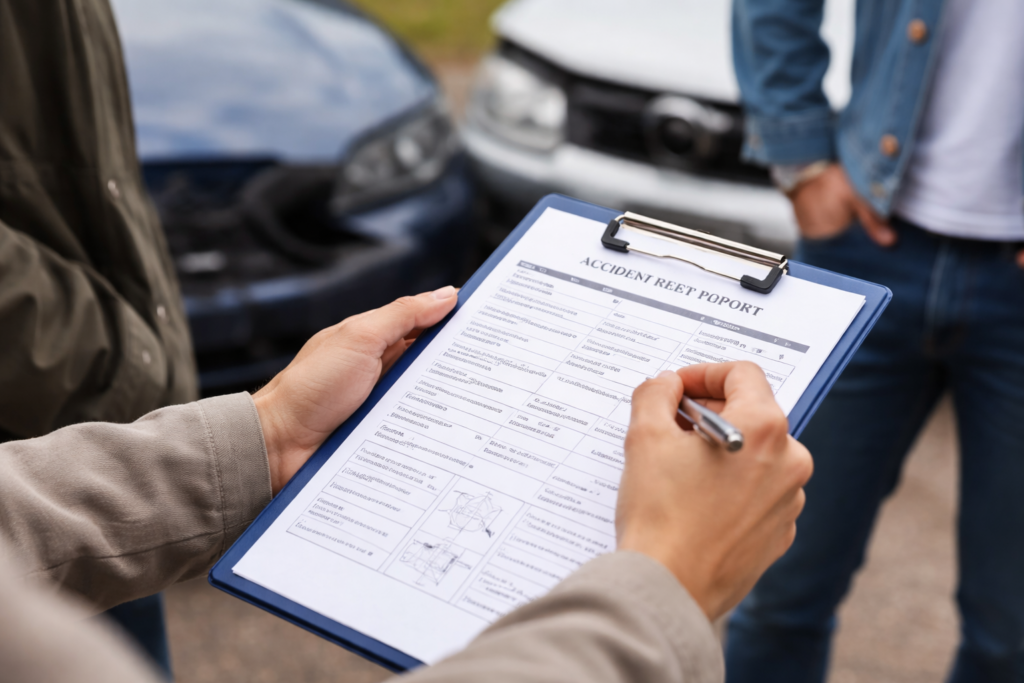
Many people who accidentally hit a parked vehicle do not experience a dramatic crash. The contact may happen while backing up near a car door, turning too tightly beside another vehicle, or navigating a crowded parking lot where mirrors, angles, and distractions reduce awareness. That is why this scenario often begins with confusion instead of certainty, especially when vehicle damage appears slight at first.
The stress rises because drivers immediately worry about criminal charges, rising insurance rates, or being accused of leaving the accident scene. In reality, the smartest move is not to guess whether the impact was serious enough to matter. It is assumed the incident may create a record, preserve evidence, and take the kind of prompt reporting steps that show good faith to the insurance company and anyone later reviewing fault.
A collision with a parked car is usually treated as a property-damage crash, even if no one was inside the vehicle. That includes clipping a bumper, scraping paint, striking a license plate, cracking a light, or causing contact that later leads to hidden body damage. What looks like a harmless tap can still turn into a claim for repair costs, diminished value, or related expenses once the vehicle owner inspects the damage more closely.
In Henderson, Las Vegas, and elsewhere in Nevada, these incidents can happen on public streets, garages, private lots, and residential complexes. The location matters because surveillance sources such as security cameras, nearby storefront footage, or dash cams can become important if the other party says the contact was more serious than you believed. That is one reason thorough documentation helps even in minor accidents.
If you realize the impact happened in real time, the priority is simple: stay calm and stop safely. A composed response helps you think clearly, avoid making statements that create insurance complications, and begin preserving the facts. In legal terms, this is part of protecting the record of the event before details become disputed.
Next, look carefully at your own car and the other car. Photograph every point of contact from multiple angles, including wide shots showing the exact location, parking layout, weather, and nearby signs. Those images can matter later if there is a disagreement about liability, the size of the impact, or whether the other vehicle was parked illegally in a way that contributed to the event.
When the driver or vehicle owner is not present, the law does not expect you to perform miracles, but it does expect a reasonable effort. In plain English, that means you should not just leave because no one is standing there. You should try to identify the owner if practical, and if that fails, leave your identifying information in a place the owner is likely to find.
For an unattended vehicle, Nevada law requires the driver to stop and either locate the owner or leave written notice with identifying information. Many people place a note under the windshield wiper, but the more important point is that the note must be clear, legible, and connected to a truthful report. That step helps distinguish responsible conduct from behavior that may later be framed as hit and run.
Whether you speak with the owner directly or leave a note, include your name, contact information, vehicle details, and basic insurance information. This is not the time for a long explanation or defensive language. A short, factual statement is usually better because it shows cooperation without speculating about fault, hidden damage, or what the accident results may ultimately be.
It is also wise to make your own record of exactly what was provided. Take a photo of the note before you leave it, and keep a copy of the time and place it was left. That small step can become valuable if the other party later claims no information was provided or your insurance provider asks when you first attempted to exchange information after the incident.
Sometimes a driver does not realize the contact happened until later, perhaps after seeing a scrape on their bumper or hearing from someone who witnessed the event. If that happens, acting quickly still matters. Returning to the area if safe, documenting the surroundings, and making a fresh effort to identify the damaged vehicle can help show that the failure to stop was not intentional.
This is one of the most sensitive moments legally because delay creates suspicion. The risk is not only a disputed insurance claim, but also the appearance that you avoided responsibility. The best approach is usually immediate documentation, a truthful report to your insurance company, and careful handling of any communication so the timeline is consistent from the beginning.
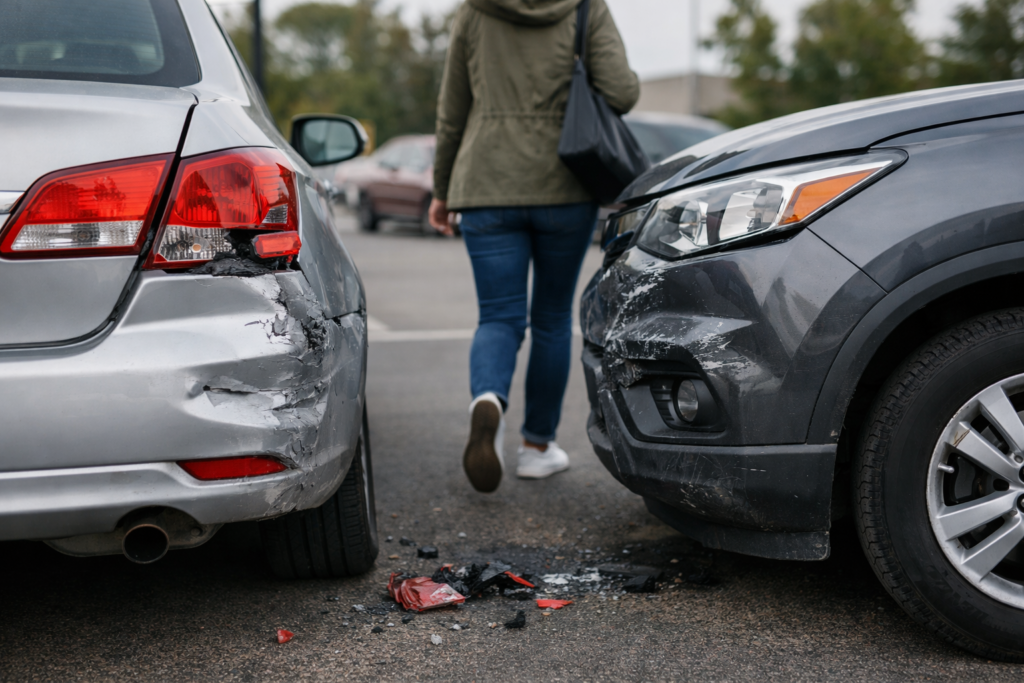
People often associate hit-and-run accident cases with major crashes, but property-damage cases can raise the same issue. If a driver leaves after damaging an unattended vehicle without taking the required steps, that can expose them to misdemeanor-level consequences rather than a simple insurance matter. That is why even a light impact should be taken seriously.
The key difference is intent and response. If you make a real effort to stop, identify yourself, and document the event, you are building evidence of responsible conduct. If you disappear and hope the matter stays small, a later complaint backed by surveillance footage, eyewitnesses, or repair estimates can turn a manageable issue into serious consequences far beyond the original damage.
A police report is not the only record that can matter, but some form of formal record often helps. Nevada DMV guidance says drivers must file an SR-1 within 10 days when the crash was not investigated at the scene by law enforcement and involved injury, death, or more than $750 in damage. Since bodywork costs climb quickly, even modest-looking damage can cross that threshold.
From a strategy standpoint, reporting early also protects your credibility. Insurers tend to scrutinize delay, inconsistency, and missing details. A timely accident report, supported by photos and dates, makes it harder for an insurance carrier to argue that the damage happened elsewhere or that your version changed after you had time to think about exposure.
In most cases, the moving driver will start from a weak position on liability. That does not mean every parked-car claim is automatic, but it does mean the facts must be strong if you want to argue that the parked vehicle’s placement or surrounding conditions contributed to the incident. This is where plain-English negligence matters: the question is whether someone failed to use reasonable care under the circumstances.
Nevada follows a modified comparative negligence rule, which means fault can be divided when the facts support it. So if a vehicle was blocking visibility, protruding dangerously, or parked illegally, those facts may still matter. They may not erase your share of fault, but they can affect how blame and damages are analyzed in a disputed claim.
Drivers often assume that if the parked car was in the wrong place, they are automatically off the hook. That is usually too simplistic. Illegal parking can be relevant, but it does not necessarily cancel the moving driver’s duty to operate carefully, especially in places like garages, hotel lots, or residential streets where tight spacing is common.
What illegal parking can do is strengthen an argument about shared fault. If the other vehicle was blocking a lane, jutting into a driving path, or positioned where a driver could not reasonably avoid contact, that fact may influence the analysis. But to make that argument effectively, you need photos, measurements, and details showing why the parking position actually contributed to the collision and resulting property damage.
The strongest evidence usually begins with photos from multiple angles, but it should not end there. Time-stamped images, video, nearby security cameras, and statements from anyone who saw the accident happen can all help confirm what contact occurred and how serious it appeared. In disputed cases, this evidence often matters more than anyone’s memory.
You should also preserve repair estimates, text messages, claim numbers, and your first written summary of the event. Consistency matters because insurers compare your early description to later statements. If your account remains steady and supported by evidence, you are in a better position to protect the claim, challenge exaggeration, and reduce avoidable insurance complications.
When you contact the insurance company, give a factual account focused on time, place, road or lot conditions, visible points of contact, and what steps you took afterward. Avoid guessing about hidden damage, apologizing in a way that sounds like a legal admission, or minimizing the event before the vehicle has been inspected. Good reporting is clear, complete, and restrained.
This matters because adjusters are trained to evaluate inconsistencies, credibility, and coverage issues. A rushed statement can create problems with liability coverage, collision coverage, or later reimbursement arguments. If the conversation starts getting detailed or adversarial, it may be wise to slow down, review your documentation, and consider getting legal guidance before giving additional recorded information.
One of the biggest surprises for drivers is how often even minor accidents become bigger disputes. Paint transfer may reveal panel misalignment, sensor issues, or hidden mounting damage. That is why a claim that begins with a “small scratch” can evolve into a larger conversation about significant damage, rental costs, and whether your insurance policy provides the right type of protection.
There is also the practical issue of premiums. Some drivers focus only on insurance rates, but the real priority should be accuracy and preservation of the claim. Whether your insurer offers accident forgiveness or not, a weak or delayed report can create more expensive long-term problems than the original incident itself.
Not every parked-car incident requires a lawyer, but some do. If the damage is being overstated, the timeline is disputed, the other side is threatening legal trouble, or the insurer is pushing for a recorded statement before you understand the exposure, speaking with a car accidentattorney can help you evaluate your legal options with less risk.
This is especially true when the case stops being just about a dented bumper and starts affecting broader losses. If someone later claims injury, loss of use, or unusually high repair costs, the matter can move from simple inconvenience to a more serious dispute. A car accident lawyer can help organize the facts, preserve communications, and reduce mistakes that undermine your position.
The best legal strategy is rarely dramatic. It is usually a combination of fast evidence preservation, truthful reporting, and disciplined communication. In Clark County, where parking incidents may be captured by businesses, residential systems, or roadway cameras, the side with the cleaner documentation often has the stronger practical position even before formal fault is decided.
It also helps to think beyond the first 24 hours. Keep medical issues documented if anyone later reports symptoms, save all insurer correspondence, and avoid casual social media posts about the event. Small details can affect how damages, credibility, and settlement value are viewed if the matter grows beyond simple property damage and into a broader claim.
It depends on how the crash was handled and the level of damage. Nevada DMV guidance says an SR-1 must be filed within 10 days if law enforcement did not investigate at the scene and the crash caused injury, death, or more than $750 in damage. Because repair costs rise quickly, many car accidents with a parked vehicle can meet that threshold sooner than drivers expect.
Yes. What looks like minor damage at the scene can later turn out to involve paint repair, sensor recalibration, bodywork, or hidden structural issues. That is why preserving photos and reporting promptly matters so much. Your documentation helps if the other party later claims more extensive vehicle damage than you initially observed.
Illegal parking can matter, but it usually does not end the case by itself. Under Nevada’s comparative negligence framework, fault may sometimes be shared if the parking position contributed to the collision. The key is evidence showing how the location, angle, or obstruction made the contact more likely, not just a general complaint that the car was in a bad spot.
A conversation with a car accident lawyer can be useful when fault is disputed, the insurer is pressuring you for statements, the damage claim seems inflated, or you are worried about legal consequences. It can also help if the event may involve more than property damage, such as an injury allegation or a complicated reporting timeline. Early legal guidance often helps people avoid mistakes that are hard to fix later.

If you unknowingly hit a parked car, the most important step is not to panic. It is taking responsible action that protects the facts, respects the other person’s property, and reduces the risk of avoidable legal implications. A careful response can make a major difference in how the insurance claim, fault investigation, and any later dispute unfold.
You do not have to sort through that stress alone, especially if the facts become contested or the insurer starts asking questions that feel bigger than a simple parking incident. Giving yourself the chance to understand your rights, your reporting duties, and your next steps can help you protect your claim and make smarter decisions. Pacific West Injury offers free consultations for people in Las Vegas, Henderson, and nearby Nevada communities who need clarity after a collision. This is general information, not legal advice.

Disclaimer: The information on this website is for general information purposes only. Nothing on this site should be taken as legal advice for any individual case or situation. This information is not intended to create, and receipt or viewing does not constitute an attorney-client relationship. Past results do not guarantee, warrant, or predict future cases. You may have to pay the other side’s attorney’s fees and costs in the event of a loss.
Pacific West Injury Law • Greater Las Vegas’ Award-Winning Injury Attorneys • #bluebearcares
This site is protected by reCAPTCHA and the Google Privacy Policy and Terms of Service apply.