
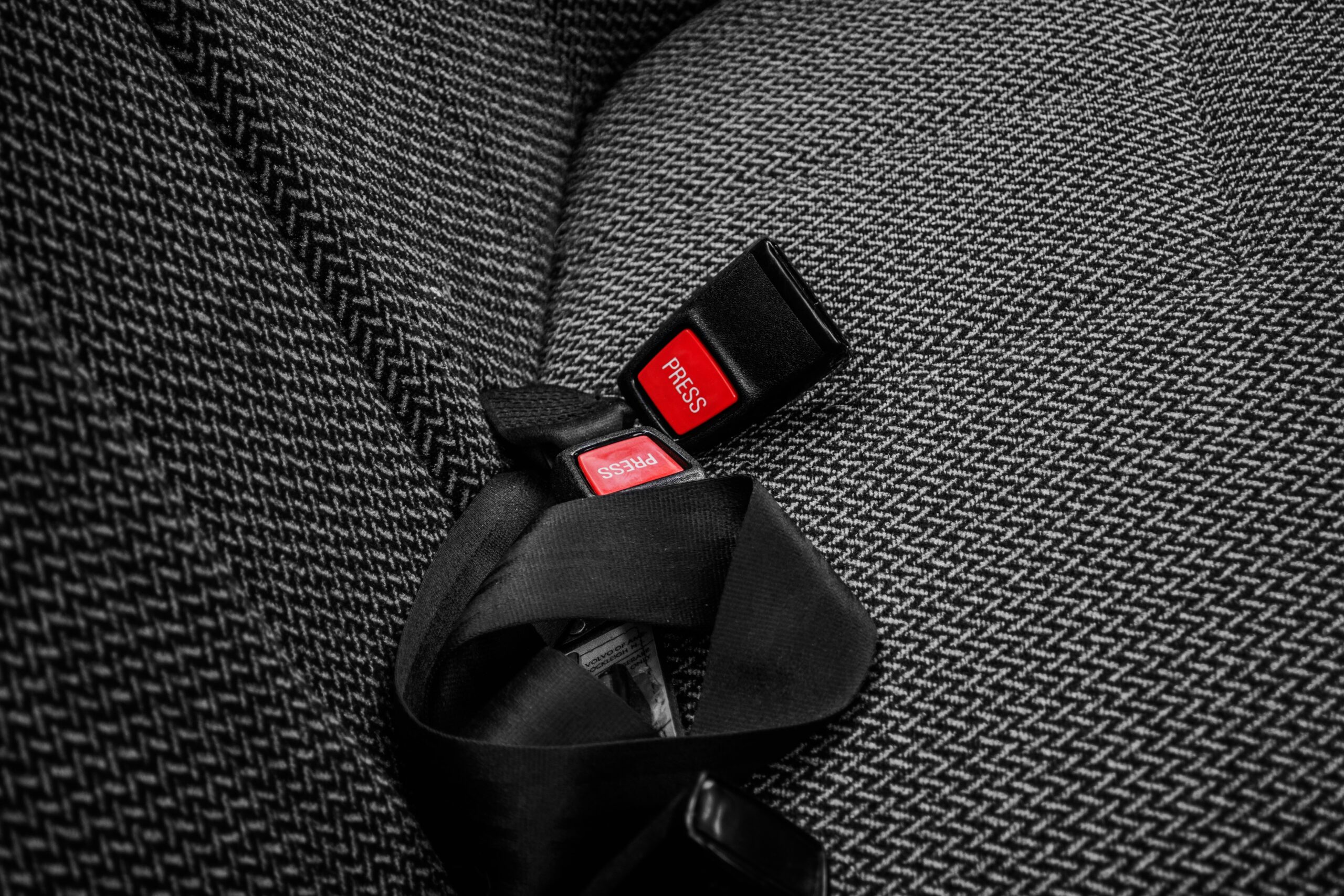
No, not in court. Unlike some states, Nevada does not allow the “seat belt defense” in civil cases, including personal injury claims. Under NRS 484D.495, failing to wear a seat belt cannot be used to argue that you were negligent or that your own choice caused your injuries. That rule protects your legal rights. It does not make seat belts optional. According to the National Highway Traffic Safety Administration (NHTSA), wearing a lap and shoulder belt reduces the risk of fatal injury by 45% for front seat passenger car occupants and by 60% for light truck occupants. Buckle up every time, and know that if the worst happens, Nevada law keeps the focus on the driver who caused the crash.
Nevada also takes part in the national “Click It or Ticket” campaign, but the penalty for an adult seat belt violation is small: a fine of up to $25 or community service under NRS 484D.495. The ticket and the injury claim are separate issues. A seat belt citation does not take away your right to seek compensation from the driver who caused the crash.
Nevada requires drivers and most passengers to buckle up, but a violation cannot be treated as negligence or causation in a civil case. NRS 484D.495(2) requires the driver and every passenger who is at least 6 years old, or who weighs more than 60 pounds, to wear a seat belt when one is available. Younger and smaller children are covered by Nevada’s separate child restraint law, NRS 484B.157. Subsection 4(b) sets the rule that matters most for an injury claim: a seat belt violation may not be considered as negligence or as causation in any civil action. In plain terms, the other side cannot point to an unbuckled belt to argue that you were at fault for the crash or that you caused your own injuries. Subsection 4(c) adds a similar protection in product liability cases, so a vehicle or parts manufacturer cannot treat non-use as misuse of its product.
Two other details are worth knowing. Under subsection 4(a), a seat belt violation is not a moving violation, so it does not add demerit points to your Nevada driving record. And under subsection 3, Nevada is a secondary enforcement state. An officer can only write a seat belt citation when the vehicle is already stopped, or someone is being arrested, for a different violation. None of this changes the basic picture. An unbuckled driver or passenger who is hurt in a Nevada crash keeps the right to bring a claim against the driver who caused it.
Because the statute governs evidence in court, not conversations with an insurer, an adjuster is free to bring up seat belt use during settlement talks. Although it should not determine what your car accident case is worth, an adjuster may hint that your injuries would have been minor if you had buckled up, or that a jury will hold it against you. The goal is usually to make an unrepresented claimant doubt the strength of the claim and accept a lower settlement. The argument carries little weight once both sides know Nevada law keeps it from being treated as negligence or causation in court. Insurers also tend to be more careful about raising it when a claimant is represented by a Las Vegas car accident lawyer.
Nevada uses modified comparative negligence, but seat belt use is not part of the fault calculation. NRS 41.141 sets the standard for evaluating personal injury claims when both drivers are at fault. Each party is assigned a percentage of fault. An injured person can recover damages as long as their share of the fault is not greater than the combined fault of the other parties, and any award is reduced by their own percentage. Someone found 20% at fault, for example, would see their recovery reduced by 20%. Speeding, texting, running a light, or following too closely can all count toward your share of fault. Seat belt use cannot, because NRS 484D.495 bars treating it as negligence or causation. That is the key difference between Nevada and states that allow a seat belt defense, where a defendant can ask a jury to cut an award because the injured person was unbuckled.
The same rule protects passengers, and it generally applies to anyone hurt in a Nevada crash, including visitors from out of state. NRS 484D.495 covers drivers and passengers alike, and passengers rarely carry any share of fault in a collision because they are not controlling the vehicle. Visitors are a big part of Las Vegas traffic. If you live in another state and were hurt in a crash here, Nevada law generally governs the injury claim, even if your auto policy was issued in a state that allows the “seat belt defense.” The same protection applies to rideshare passengers in an Uber or Lyft, to passengers in a friend’s car, and to children, whose child restraint law, NRS 484B.157, contains its own bar on treating a violation as negligence in a civil case. Choice of law questions can get complicated when people from several states are involved, which is one more reason to have a Nevada attorney look at the details.
If an adjuster, representative, or attorney mentions seat belts when dealing with insurance claims after an accident, stay calm, keep the conversation short, and avoid agreeing to anything on the spot.
You do not need to argue the law with the adjuster. A simple response works: you understand Nevada law does not allow seat belt use to be treated as negligence or causation in a civil case, and you would like the claim evaluated on how the crash happened and the injuries you suffered. Then put your position in writing so there is a record of it.
Be careful about what else you say. Avoid giving a recorded statement, guessing about speed or distances, or downplaying your injuries before you have finished treatment. Keep copies of the police report, photos of the scene and vehicles, medical records, and every letter or email from the insurer.
If the adjuster keeps returning to the seat belt, or uses it to justify an offer that does not cover your medical bills and lost income, that is a good time to talk with a Nevada personal injury attorney. A lawyer can respond on your behalf, push back on arguments that would not hold up in court, and keep your filing deadline protected. In Nevada, most personal injury claims must be filed within two years under NRS 11.190(4)(e).
If you have questions about how Nevada seat belt laws may apply to your personal injury claim, contact our office to schedule a free case evaluation.
An insurer can raise it, but it should not decide your claim. No Nevada law stops an adjuster from bringing up seat belt use or from making a low offer because of it. What NRS 484D.495 does is prevent a missing seat belt from being treated as negligence or causation in a civil case, so there is no seat belt insurance penalty waiting for you if the claim goes to court. A denial or reduced offer based only on seat belt use is worth reviewing with an attorney.
Not on its own. Nevada uses secondary enforcement, so an officer can only cite a seat belt violation when the vehicle is stopped for another offense. The fine is up to $25 or community service, and because it is not a moving violation, it does not add demerit points.
Yes. NRS 484D.495 applies to drivers and passengers alike, so an unbuckled passenger’s injury claim is protected the same way. Children are covered by NRS 484B.157, which has a similar rule. For a ticket, the driver is cited for an unbuckled child, while an adult passenger receives their own citation.
In most cases, yes. Nevada law generally governs injury claims from crashes that happen in Nevada, even if you live and are insured in another state. If more than one state is involved, an attorney can confirm which law applies to your case.
Generally, no. Because NRS 484D.495 bars treating seat belt use as negligence or causation, your attorney can ask the court before trial to keep that evidence out. If it comes up anyway, your attorney can object and ask the judge to instruct the jury to disregard it.
Disclaimer: The information on this website is for general information purposes only. Nothing on this site should be taken as legal advice for any individual case or situation. This information is not intended to create, and receipt or viewing does not constitute an attorney-client relationship. Past results do not guarantee, warrant, or predict future cases. You may have to pay the other side’s attorney’s fees and costs in the event of a loss.
Pacific West Injury Law • Greater Las Vegas’ Award-Winning Injury Attorneys • #bluebearcares
This site is protected by reCAPTCHA and the Google Privacy Policy and Terms of Service apply.